J.3D.1: Computational Weaving & Reconfigurable Jacquard Loom
Impact Summary
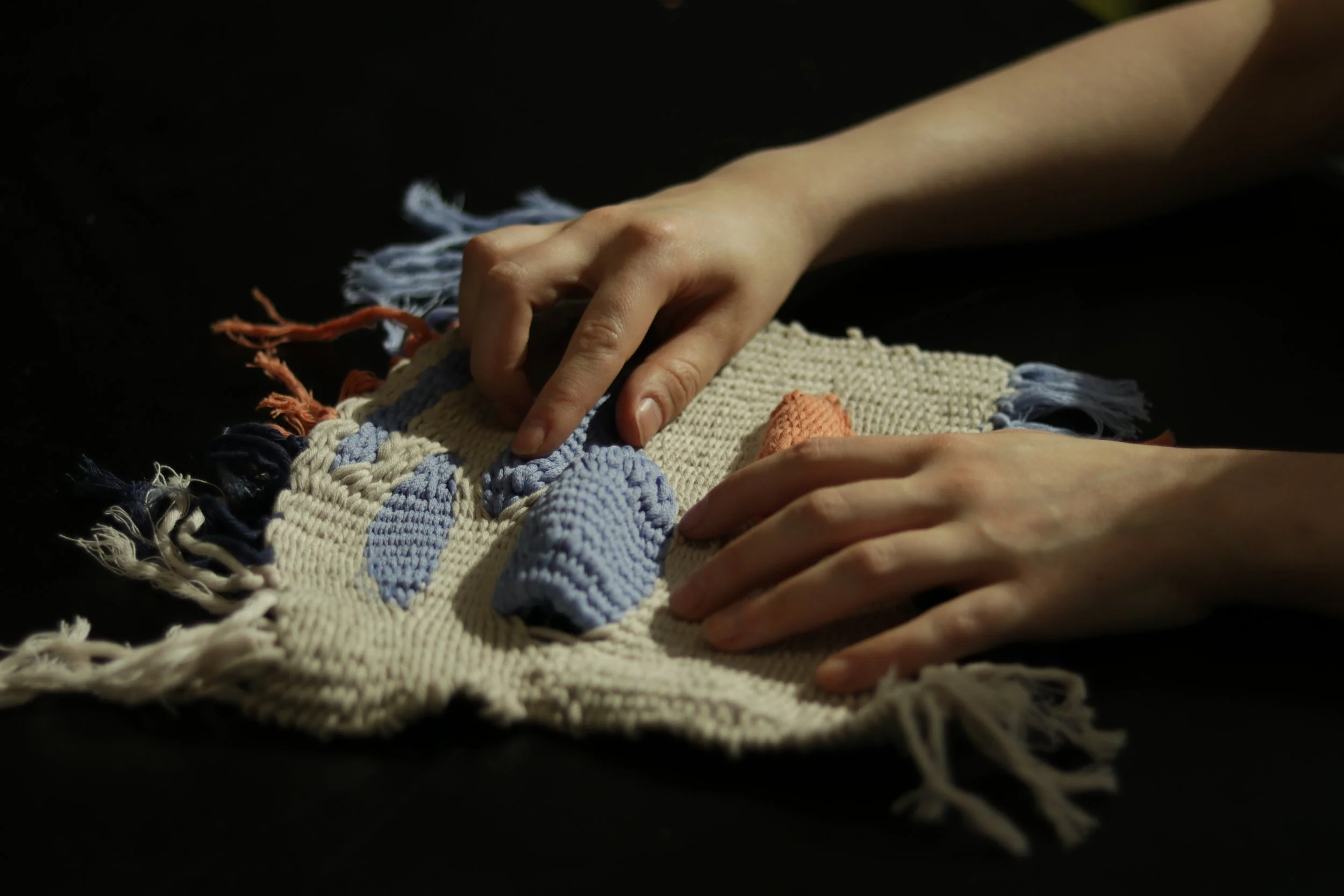
Designed a human-centered interaction model for a computational Jacquard loom, making complex machine behavior understandable and usable across skill levels. The project demonstrates how clear feedback loops, adaptable interaction logic, and iterative design can turn technically complex systems into intuitive, learnable tools.
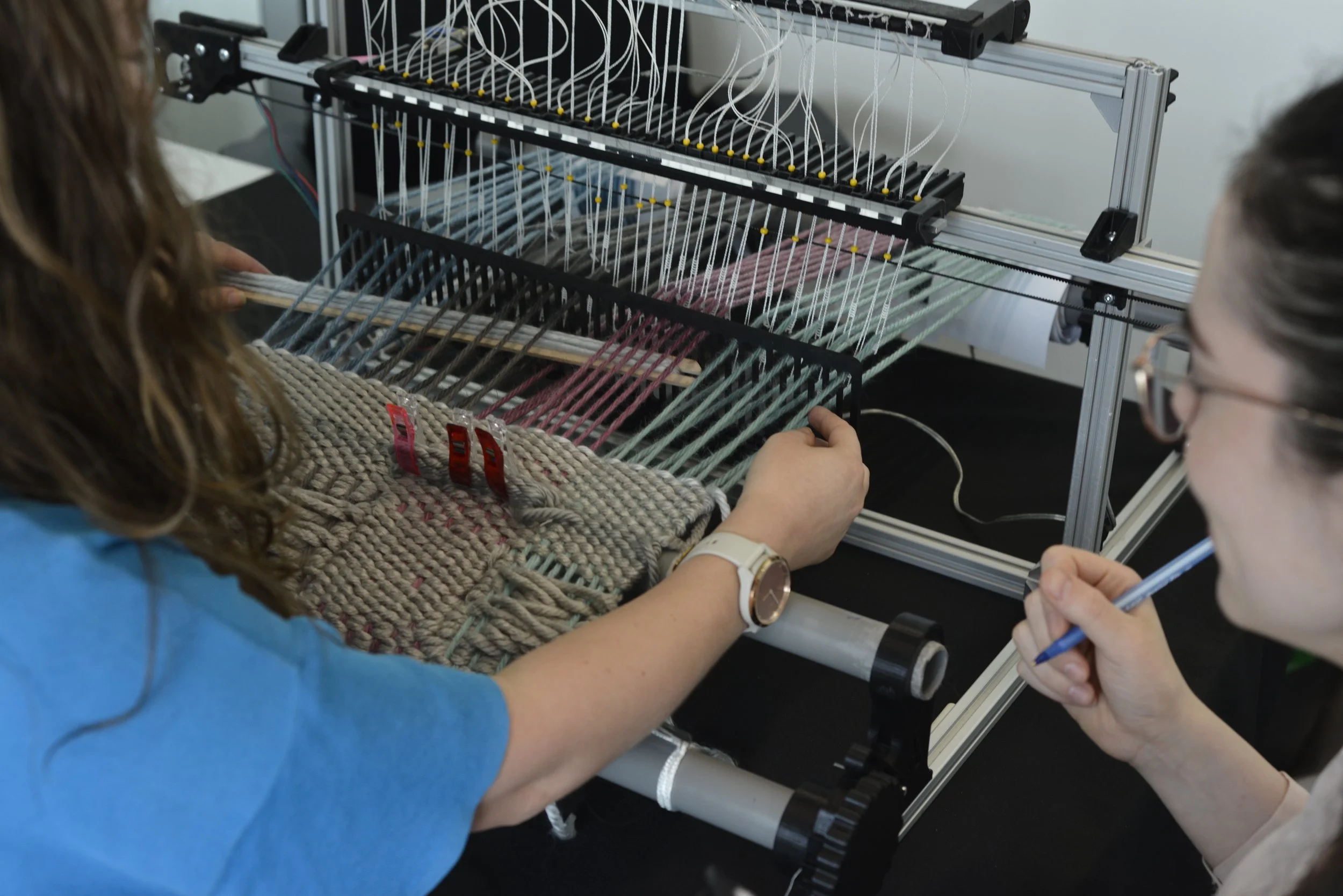
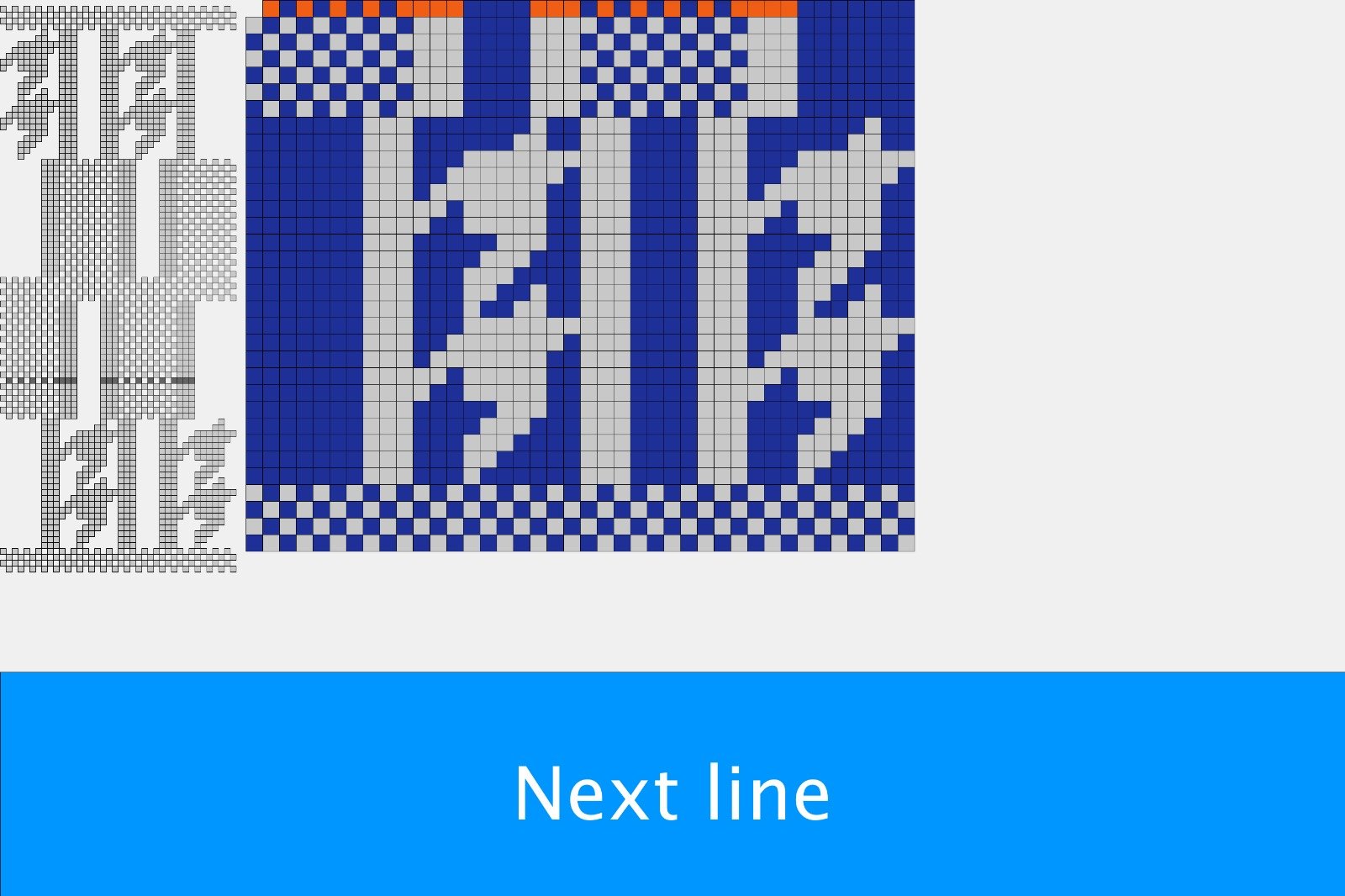
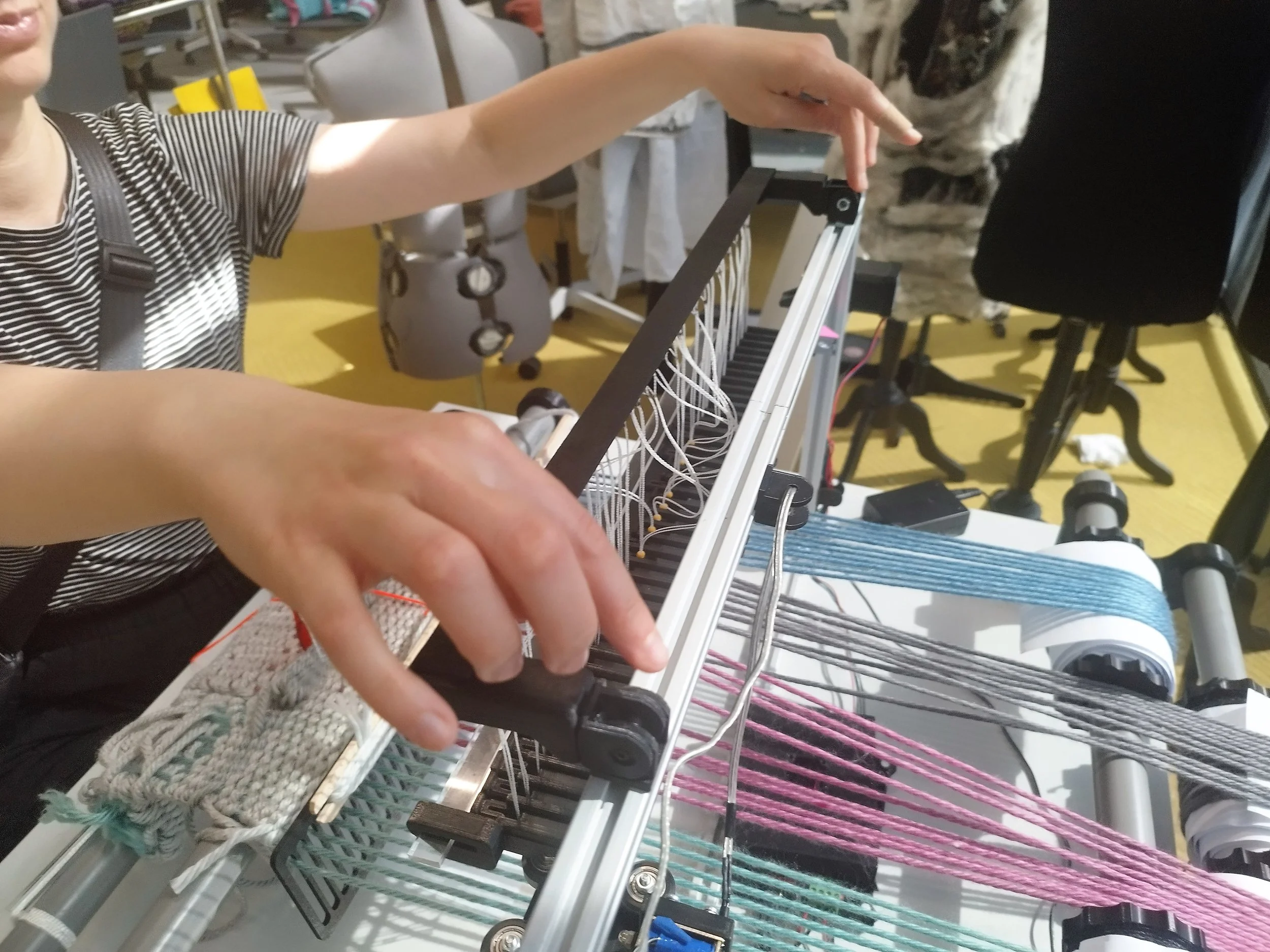

Context
As computational tools become more powerful, they often become harder to understand. In weaving, existing Jacquard looms tend to favor either beginners or experts, leaving little room for systems that adapt to users as they learn. This creates friction, limits exploration, and reduces trust in the technology.
Goal
Design an interaction-first computational system that:
makes system behavior transparent
supports both novice and expert users
balances manual control with computational assistance

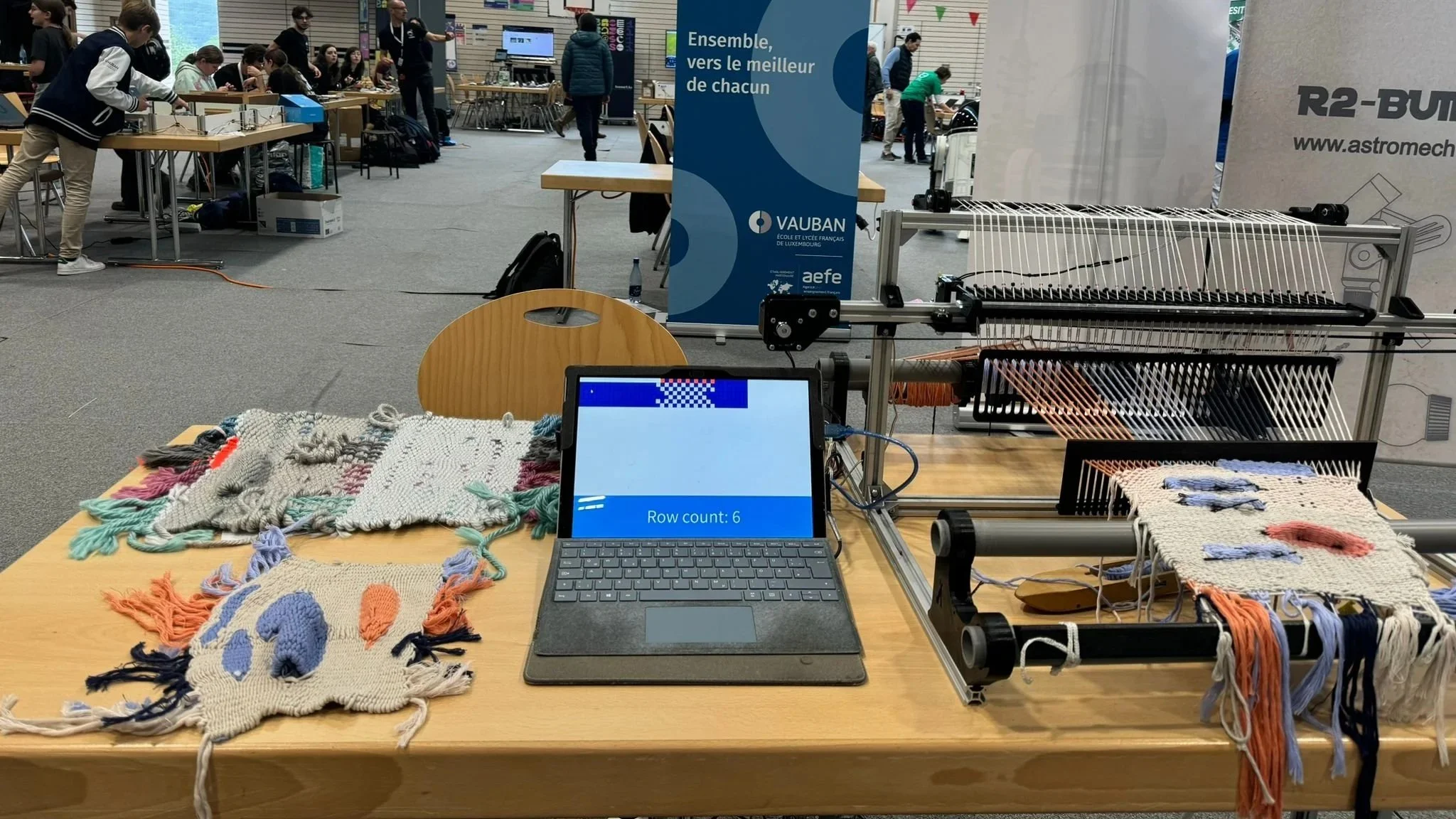
DDW23 Exhibitor
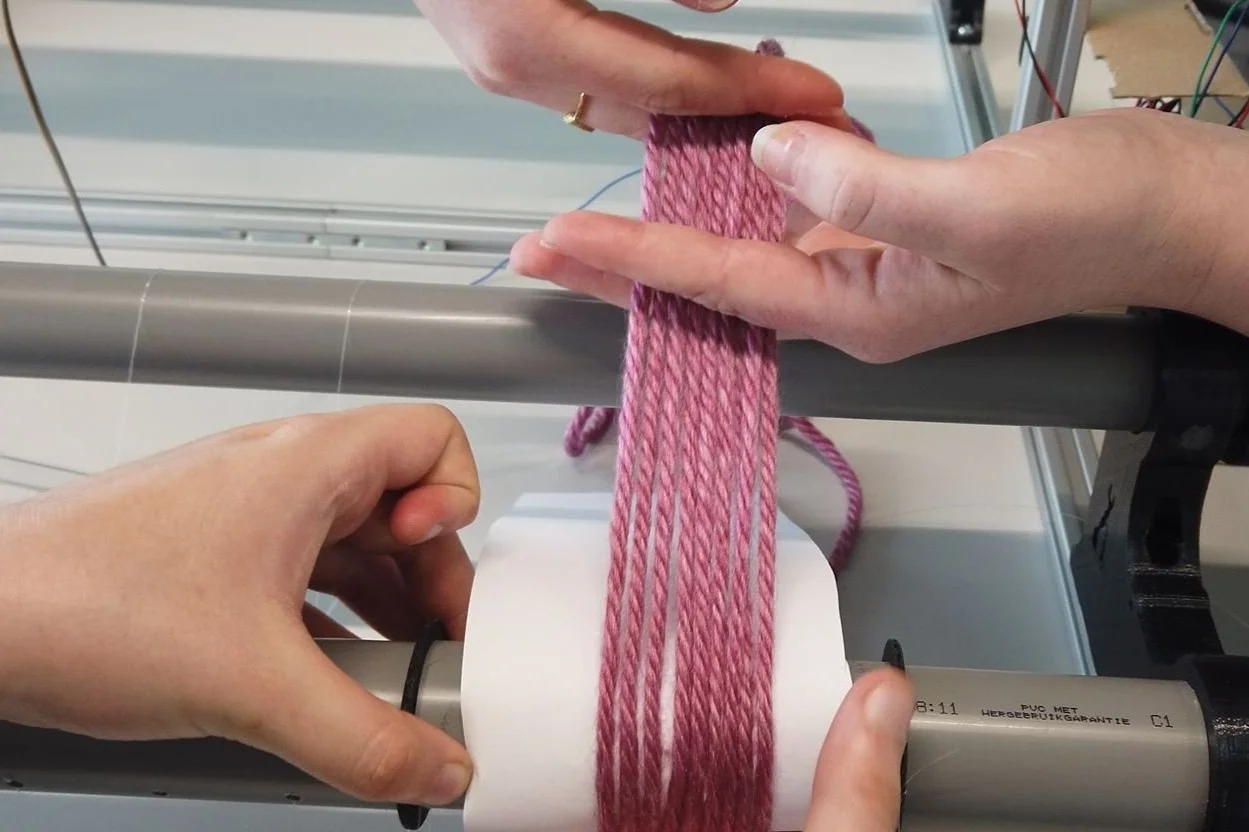

Maker Faire Luxemburg 24
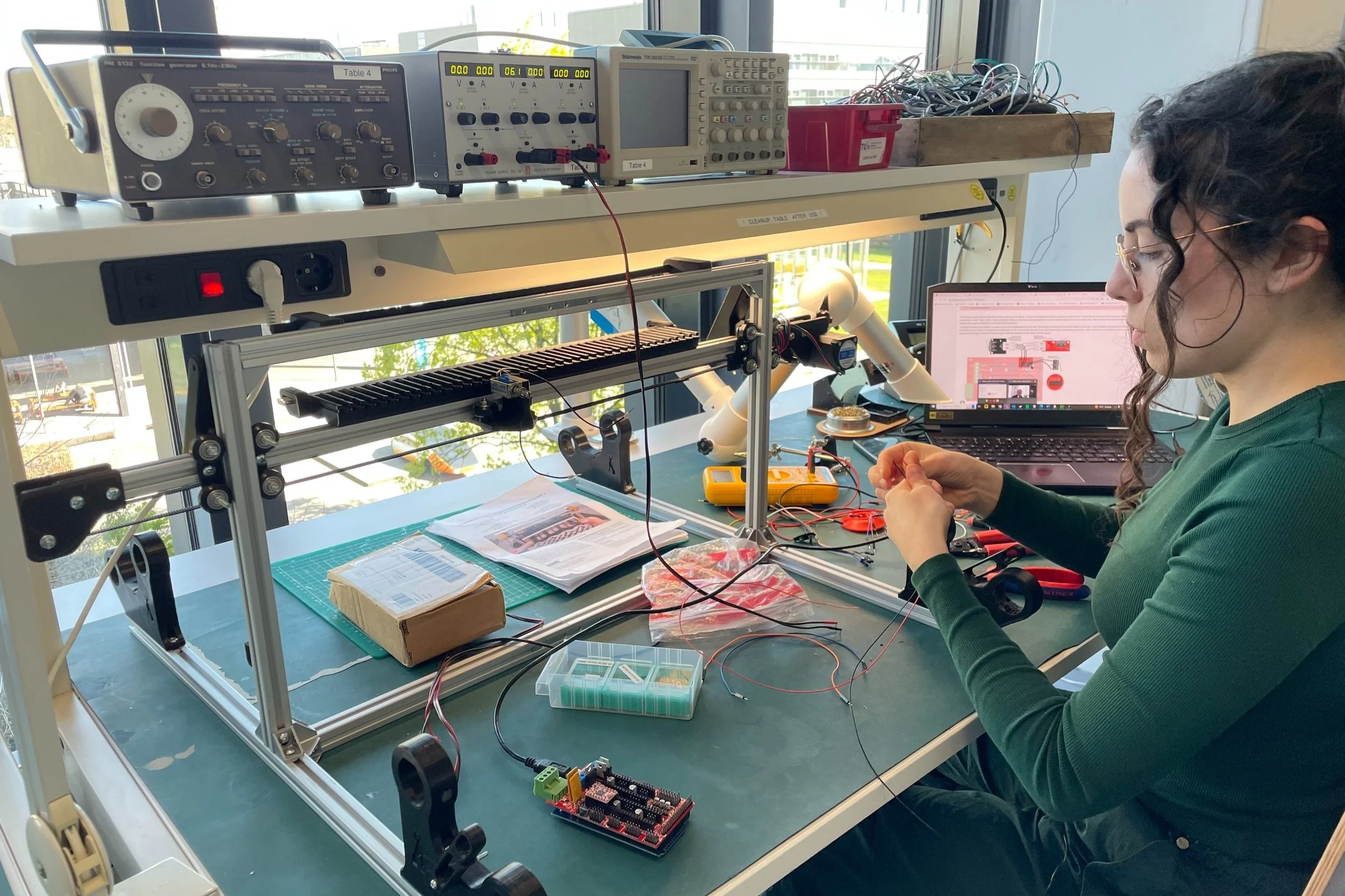
Worked as part of a small design team (3 designers), contributing to interaction design, user research, and iterative prototyping
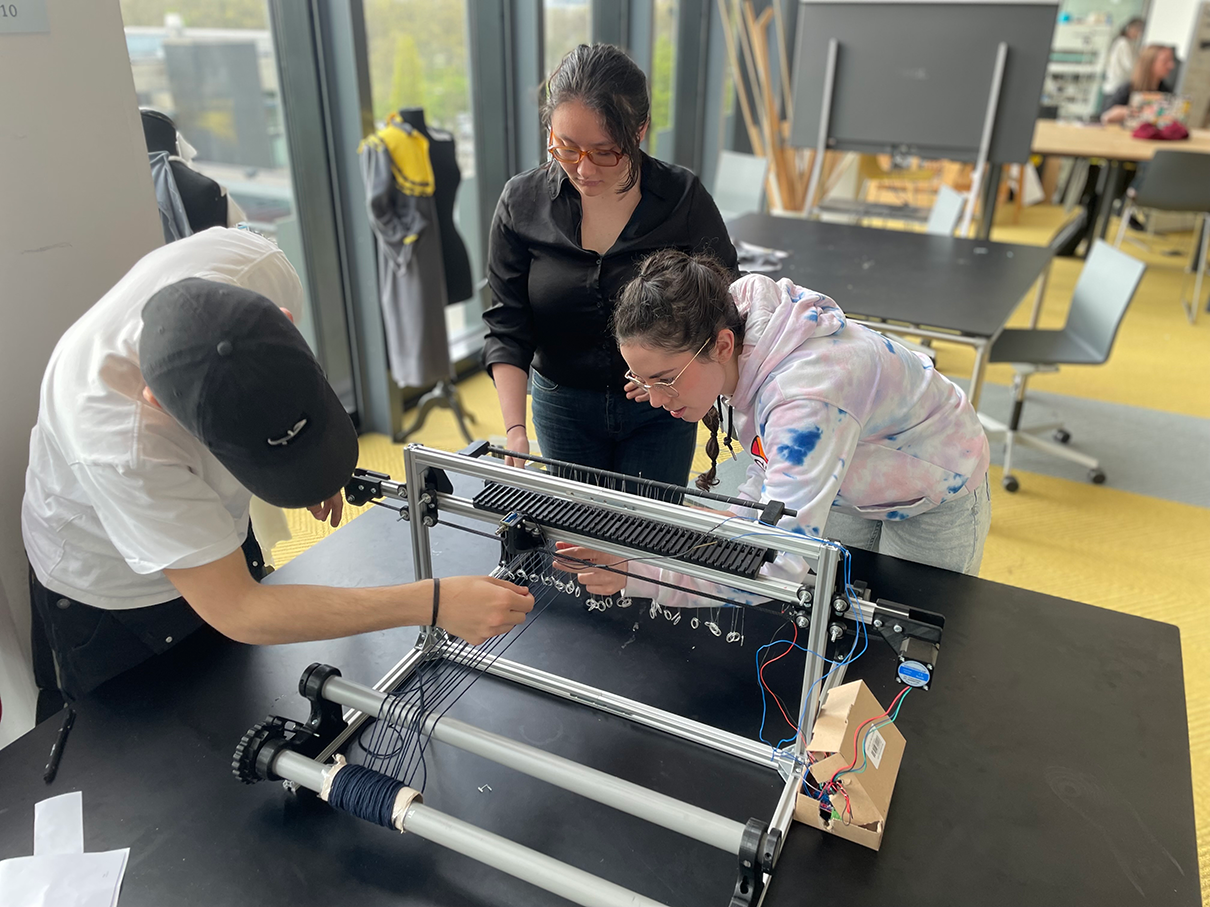
My Role
Approach
We followed a human-centered, iterative design process, treating the loom as a living system that evolved through use.
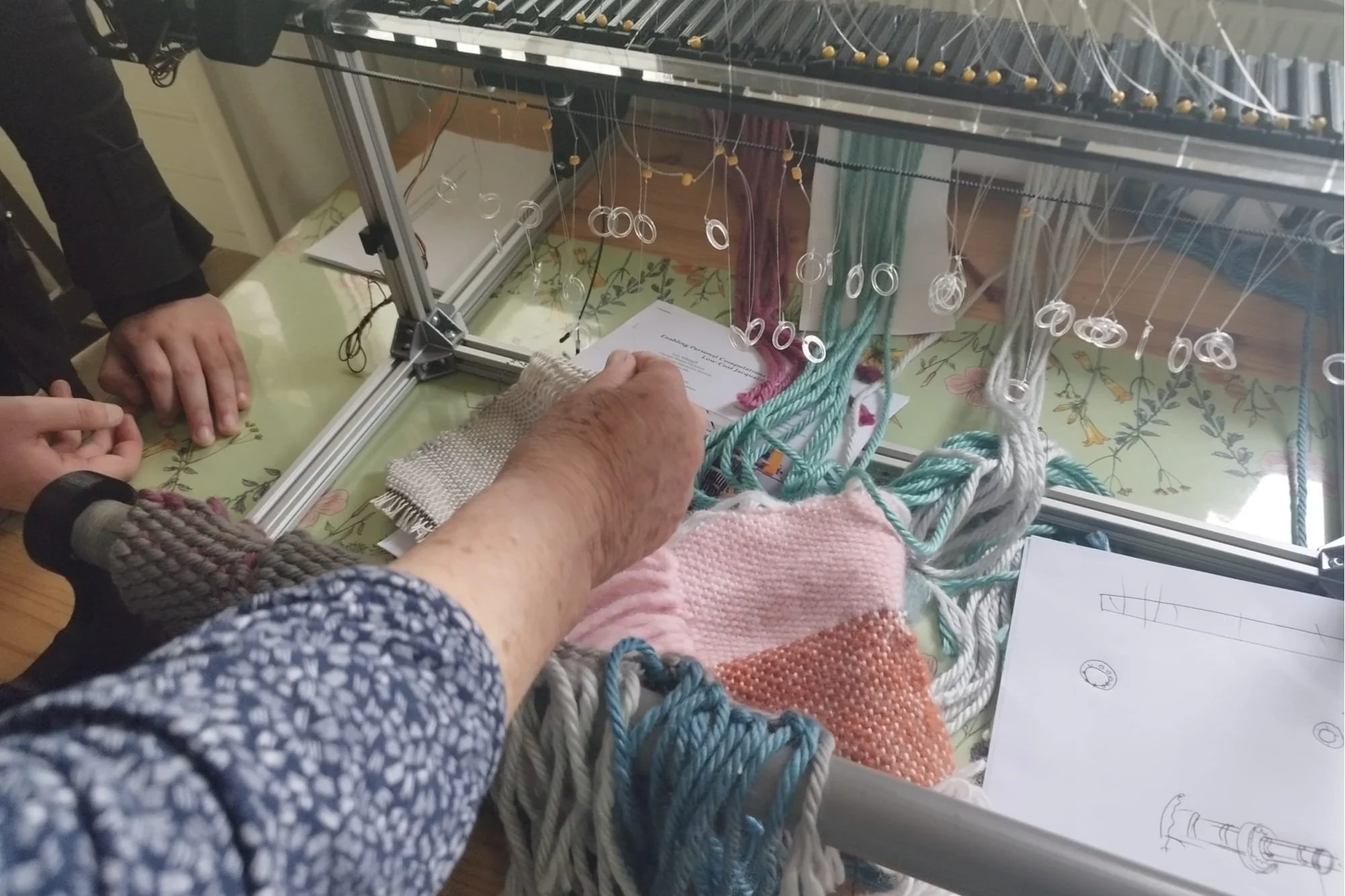
Conducted interviews and hands-on testing with novice and expert users
Observed how users formed mental models while interacting with the system
Identified breakdowns in feedback, control, and understanding
Translated insights into interaction logic, system behaviors, and modular changes
Iteratively prototyped and tested improvements
Rather than defining a fixed solution upfront, the system evolved through continuous feedback loops between users and the machine.
Solution
The final design is a low-cost computational Jacquard loom capable of producing 3D woven structures, centered on interaction clarity and adaptability.
Key interaction qualities:
Clear cause-and-effect between user actions and system responses
Modular components that support different workflows and skill levels
A balance between automation and user agency
The system supports learning through use, allowing interaction complexity to grow alongside the user.
Outcome
Functional, user-tested complex physical–digital system
Interaction improvements directly informed by user feedback
Increased system transparency and user confidenc
Open-source documentation to support community adoption and iteration